7 Perpetual Futures Trading Apps For Mobile Traders In 2026
Seven of the most relevant perp apps for phone-first traders, compared on order entry, leverage, risk controls, custody, and how painful it is to manage an exit when the market is moving.
If you want to trade perps on your phone, the hard part isn't finding an app — it's finding one that gives you speed, usable risk controls, and enough market depth that you're not stuck compromising on every trade. I've spent years covering crypto derivatives and testing mobile trading workflows, and for this roundup I looked at how each app actually handles the things that matter on a small screen: order entry, leverage, funding, liquidation visibility, custody, and how painful it is to manage exits when the market is moving fast.
This list focuses on seven of the most relevant perpetual futures apps for mobile traders in 2026, including centralized exchange apps and wallet-native alternatives. I'll break down where each one shines, where it feels cramped, and which type of trader it suits best. If you want the short version: the best app is the one that makes it easy to enter a trade, manage risk, and get out without fighting the interface.
How I Evaluated These Perpetual Futures Apps On Mobile
I looked at these apps the way I would use them on a train platform or in a coffee line, not from a desk with three monitors. That means the baseline questions were simple: can the order ticket be opened without hunting through menus, can leverage be adjusted without losing track of liquidation price, and can a stop-loss be set before the trade is live.
I also separated app design from product structure. A clean interface means little if the venue has thin books, limited contract coverage, or awkward funding rules. For the perp apps below, I paid attention to five things that change the actual trading experience on mobile:
- custody model
- leverage and margin controls
- funding and collateral options
- liquidation and risk visibility
- how fast exits can be managed once a position is open
Perpetuals are a futures-like product with no expiry date, and they rely on funding to keep the contract anchored near spot. That structure is what makes them easy to hold for hours or days, but also why the mobile interface needs to make risk obvious fast (perpetual contracts explained).
The comparison below reflects that. A wallet-native app can be the better fit for someone who will not keep funds on a centralized venue. A CEX app can be better for traders who want deeper books and a more familiar order flow. The trade-off shows up on the screen almost immediately.
Perpetual Futures Trading Apps Compared At A Glance
| App | Custody model | Leverage | Risk controls | Mobile notes |
|---|---|---|---|---|
| Farao | Self-custodial interface layer | Up to 50x | TP/SL at entry, liquidation visibility, funding shown | Phone-first, iPhone-only app, broad cross-asset coverage |
| Bybit | Centralized exchange app | Up to 100x on some contracts | Quick Trade, hedge mode, TP/SL, risk limits | Dense futures workflow built for active traders |
| OKX | Centralized exchange app | Up to 100x on some contracts | Real-time P&L, quick close, partial TP/SL | Polished app with broad perp coverage |
| Kraken Pro | Centralized venue | Up to 50x | Capped risk, multi-collateral futures wallet | More conservative derivatives experience |
| GMX | Wallet-based DEX | Up to 100x | Oracle pricing, onchain execution | Direct wallet flow, less consumer-style polish |
| dYdX | Chain-native perp venue | Varies by market | Market limits, margin fractions, leverage caps | Built around market structure and pro controls |
| Aster | Wallet-based perp DEX | Platform-specific | Hidden orders, grid trading, cross-chain flow | Privacy-led app with mobile beta support |
Farao
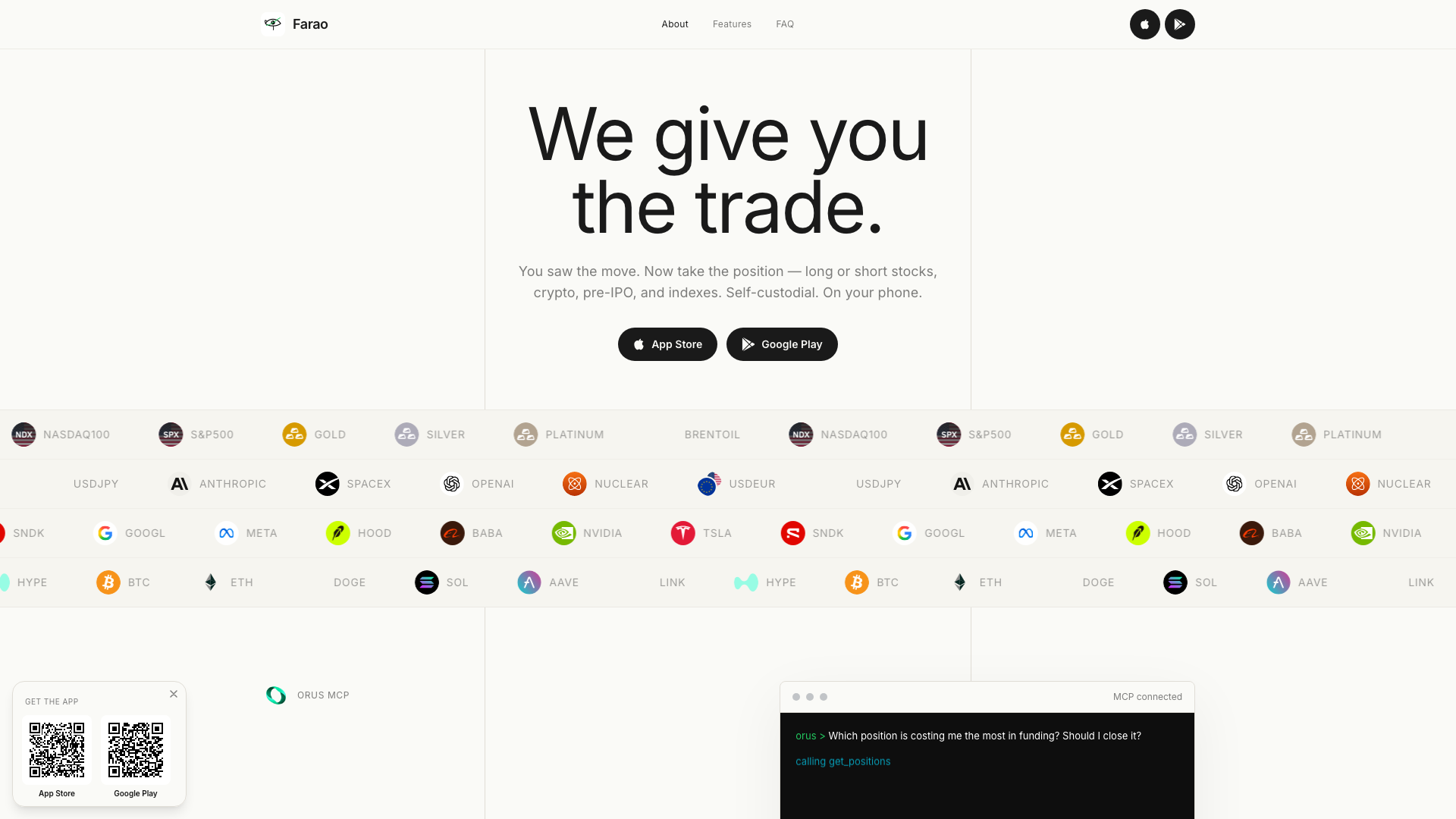
Farao is the most phone-native of the group. The app is built by Alamas Labs, Inc. and presents itself as a self-custodial interface rather than a broker or custodian. In practice, that means trades are signed from the user's wallet, and Farao says it does not hold user funds (getfarao.com).
For mobile perpetuals, the appeal is the flow. The site lays out a simple sequence: fund in USDC, choose a market, set take-profit and stop-loss at entry, then open the position. The company says trades settle on Hyperliquid L1, with funding from card or crypto transfer available on mobile. The app store listing calls it a futures and perps app, and the site advertises up to 50x trading power and 100+ markets across crypto, equities, indexes, commodities, and some names that are usually absent from perp apps, like pre-IPO and private-company themes (Farao app listing).
Pros
- Self-custodial by design
- TP/SL is set before the order goes live
- Broad market list for a phone-first app
- Onboarding and funding are designed around mobile use
Cons
- iPhone only
- Fee schedule is not fully public in the materials I reviewed
- Newer product than the large CEX apps, so the user base is likely smaller
Bybit
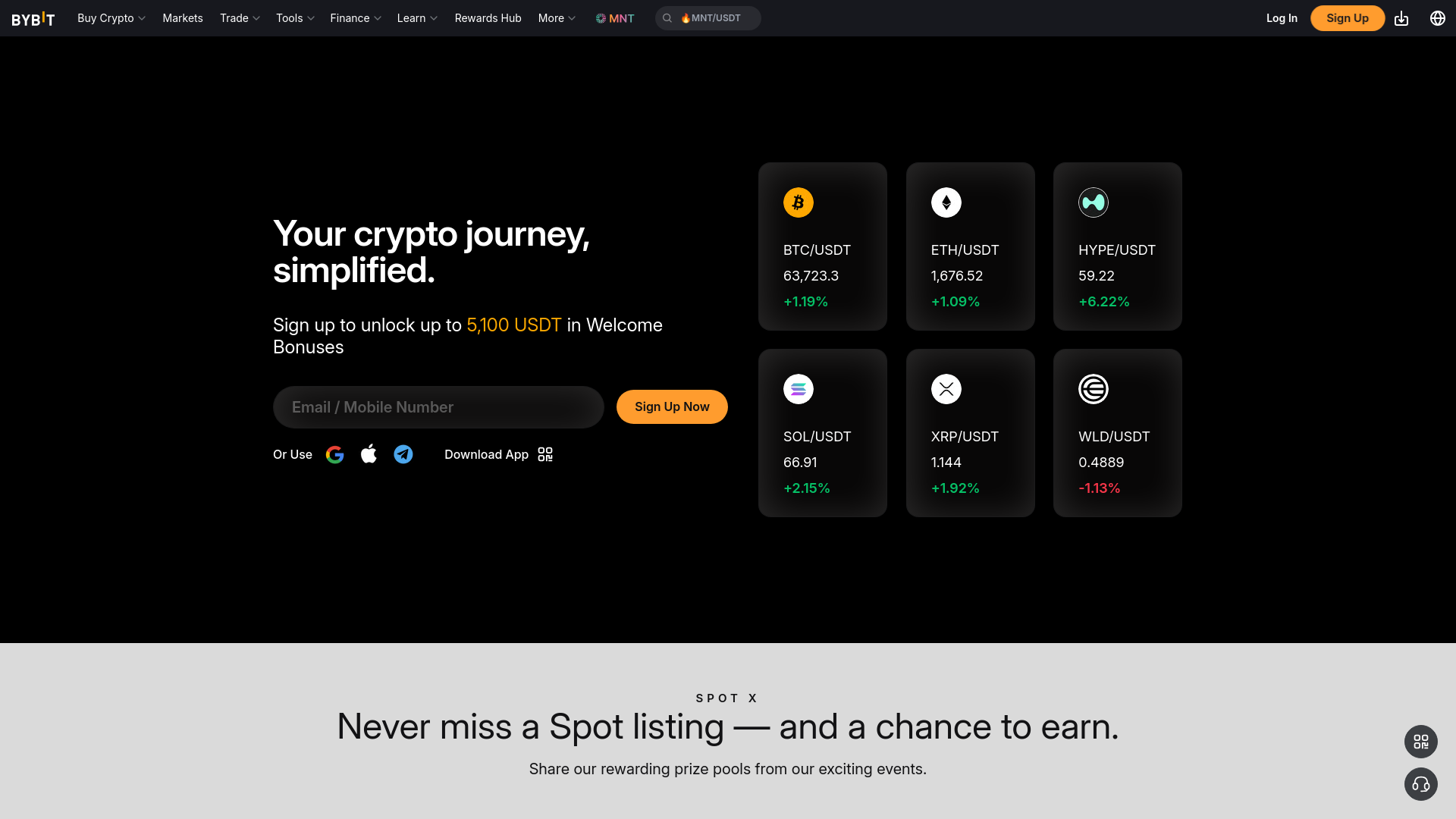
Bybit has one of the more complete mobile derivatives workflows. Its help docs walk through Quick Trade, the order zone, hedge mode, and risk limits in the app, which is useful because those are the parts that tend to disappear or get buried on smaller screens (Bybit futures guide).
It feels built for traders who already know what they want to do. The order panel gives you leverage, margin mode, and position mode in the same path, and the docs make it clear that TP/SL can be placed together with the position. Bybit also documents USDT perpetuals and inverse contracts, with leverage and risk limits changing as position size grows. That makes the app useful for active traders, but it also means the interface carries a lot of moving parts.
Pros
- Strong mobile order-entry workflow
- Quick Trade is useful when a chart move happens fast
- Hedge mode and TP/SL are easy to reach
- Good depth for derivatives users who trade often
Cons
- The interface can feel crowded
- More suitable for experienced traders than for a first perp trade
- Feature density can slow down simple orders
OKX
OKX is the most complete all-purpose CEX app in this group. Its mobile docs cover perpetual trading with real-time P&L, quick close, partial TP/SL, and funding notifications. The venue also documents both crypto-margined and USDT-margined perpetuals, with some products offering up to 100x leverage (OKX perpetual explainer).
The app's strength is that it keeps risk information visible without making the trade ticket feel broken into separate screens. That matters once a position is open. The simpler apps often make opening a trade easy and managing it awkward; OKX is more balanced. It is still a centralized venue, so custody is the usual trade-off, but for mobile users who want a broad contract set and a familiar order book workflow, it is hard to ignore.
Pros
- Broad perpetual coverage
- Real-time P&L and funding prompts are easy to track
- Quick close and partial exits are useful on mobile
- Strong support for higher-leverage products
Cons
- Centralized custody may not suit everyone
- Feature breadth can take time to learn
- Some contract types are easier to access than others depending on region
Kraken Pro
Kraken's mobile perpetual offering is more restrained than the bigger derivatives apps. Kraken markets up to 50x leverage and emphasizes capped risk and multi-collateral futures wallets. It also routes perpetual trading through the Kraken app and Kraken Pro, which makes it easier to keep spot, margin, and derivatives in one venue (Kraken perpetuals).
That setup suits traders who want a more measured derivatives experience. The product is not trying to replicate every advanced terminal behavior on a phone. It gives you enough access to trade perps, but the overall feel is closer to a regulated exchange workflow than a high-speed crypto-native derivatives screen.
Pros
- Up to 50x leverage is enough for many users
- Integrated access with spot and margin accounts
- Capped risk is easy to understand
- Cleaner fit for users already on Kraken
Cons
- Lower leverage than some competitors
- Smaller derivatives feature set than Bybit or OKX
- Less suited to aggressive intraday perp trading
GMX
GMX is the clearest wallet-native perp venue in this list. Its docs describe a decentralized spot and perpetual exchange on Arbitrum, Avalanche, Botanix, and MegaETH, with up to 100x leverage. It uses oracle-based pricing from Chainlink Data Streams rather than a standard order book (GMX docs).
That structure changes how the app feels on mobile. There is less of the exchange-style ticketing that you see on CEX apps, and more of a direct wallet trading flow. For users who care about self-custody first, that is the point. For users who want a fast, familiar order book with tight price discovery, it can feel different enough to take some adjustment.
Pros
- Direct wallet trading
- Oracle pricing can reduce some wick-related issues
- Up to 100x leverage on some products
- Good fit for onchain users
Cons
- Less familiar than exchange-style apps
- Wallet funding adds steps
- Mobile experience is more functional than polished
dYdX
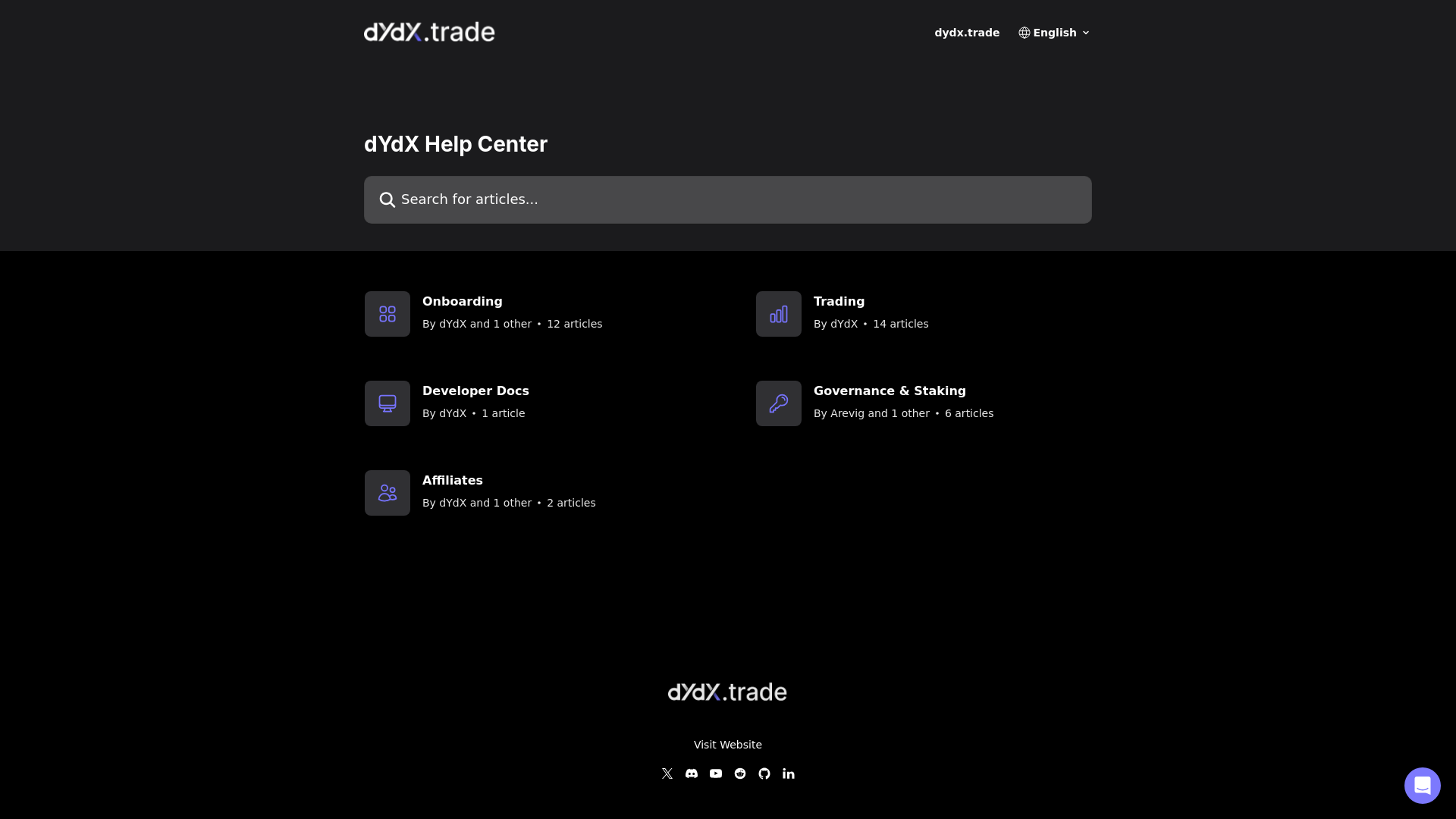
dYdX is the most market-structure-oriented app in the group. Its help center focuses on market selection, tick size, step size, margin fractions, leverage limits, and open-interest caps. That tells you a lot about the product. It is a perp venue first, a consumer app second (dYdX help center).
On mobile, that means the app is useful if the trader already thinks in terms of markets and limits rather than shortcuts and one-tap flows. It is not trying to hide the mechanics. For some users, that is the appeal. For others, it feels like more detail than they need on a phone.
Pros
- Clear market-level controls
- Strong fit for chain-native trading
- Good for users who care about limits and structure
- Broad perp availability on supported markets
Cons
- Less consumer-friendly than Bybit or OKX
- More technical to use on mobile
- Best experience depends on comfort with onchain trading
Aster
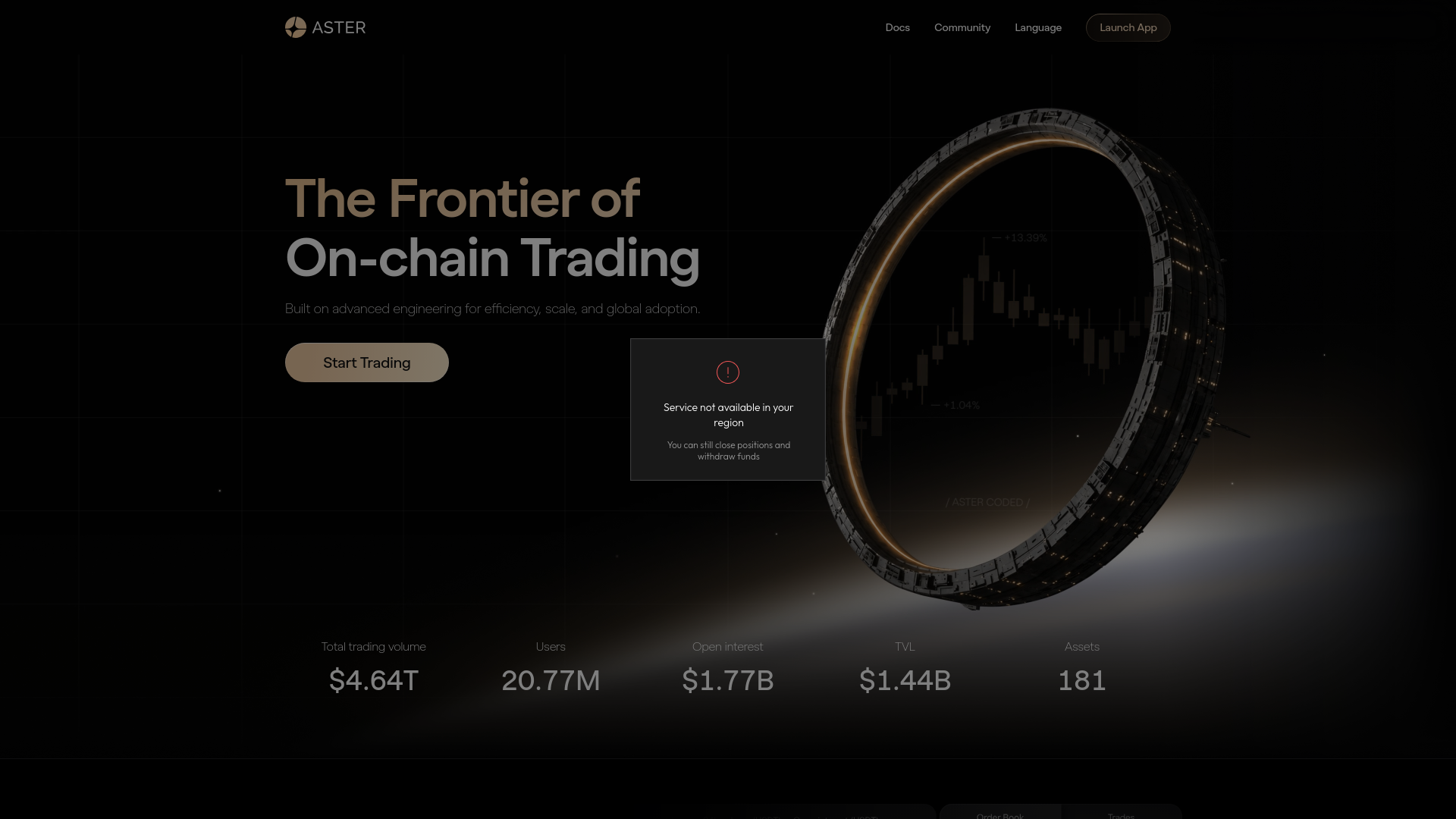
Aster takes a different route again. It positions itself as a privacy-focused perp DEX with mobile app support, hidden orders, grid trading, and cross-chain access. The project's homepage also publishes sizable platform metrics, including TVL, open interest, users, and total volume, which makes it one of the more visible newer names in the category (Aster homepage).
On mobile, the app is built around onchain execution rather than exchange custody. That makes it attractive to traders who want more privacy around order placement. It also makes the experience feel less like a conventional futures app. If the goal is to move between chains and keep the trade flow inside a wallet-first setup, Aster is built for that.
Pros
- Mobile app support is part of the product pitch
- Hidden orders are useful for privacy-sensitive users
- Cross-chain access broadens the setup options
- Onchain structure avoids exchange custody
Cons
- Privacy-focused trading is a narrower use case
- Less familiar to users coming from CEX apps
- App behavior can depend on wallet and chain setup
Which Perpetual Futures App Is Best For Your Trading Style?
The right pick depends on how you trade more than where you trade.
- For a phone-first trader who wants self-custody and a simple trade flow, Farao is the cleanest match.
- For active CEX derivatives users, Bybit gives the most familiar high-speed futures workflow.
- For traders who want broad contract coverage and strong risk visibility, OKX is the most balanced of the centralized apps.
- For users already inside Kraken's ecosystem, Kraken Pro is the easier conservative choice.
- For wallet-native traders, GMX is the most direct perp DEX option.
- For users who want market-level controls and chain-native structure, dYdX fits better than the consumer-style apps.
- For privacy-focused onchain traders, Aster is the most specific fit.
The common mistake is treating every perp app as if it solves the same problem. Some are built to get you into a position fast. Some are built to keep you in full control of the wallet. Some are built for deeper market structure. On a phone, that difference shows up immediately in the order ticket and again when the trade goes against you.
Frequently Asked Questions
What is a perpetual futures trading app?
A perpetual futures trading app lets users go long or short on a contract with no expiry date. These apps usually include leverage, funding-rate mechanics, and liquidation controls.
Are perpetual futures riskier than spot trading?
Yes. Perps use leverage, so a small price move can have a much larger effect on a position. That cuts both ways and makes stop-loss placement more important.
Do I need a centralized exchange to trade perps on mobile?
No. Some apps are centralized exchange apps, while others are wallet-based or fully onchain, such as GMX, dYdX, and Aster.
Which app is easiest for beginners?
Among the apps here, Kraken and OKX are usually easier to make sense of than more technical perp DEXs. Farao is also designed around a simpler mobile flow, but it is newer and only available on iPhone.
What should I check before opening a perp trade on my phone?
Check leverage, margin mode, liquidation price, funding rate, and whether TP/SL is set before the order is submitted. On mobile, the interface should make those numbers easy to see without extra taps.