Best Mobile Trading Apps For Crypto Derivatives In 2026
Six derivatives apps put through the same mobile workflow — funding, order entry, position management, and exit — to find which one actually fits how you trade.
"Best" is doing a lot of work in this title, so let me define it. The best mobile app for crypto derivatives is the one that gets you through the full loop — fund, open, manage, exit — with the least friction and the fewest surprises, for the way you trade. There is no single winner. There is a best app for the trader who wants depth, a best app for the trader who wants self-custody, and a best app for the trader who wants to stop thinking about the venue entirely.
For this comparison I ran six apps through the same workflow on a phone: deposit collateral, open a leveraged position with a stop attached, adjust it, and close part of it during a moving market. The six cover the realistic range in 2026 — three centralized exchange apps (Bybit, OKX, Kraken Pro), two onchain venues (GMX, dYdX), and one wallet-native mobile app (Farao).
What Separates A Good Derivatives App From A Spot App With Leverage
Derivatives add three things that a spot interface never has to show: funding, margin, and liquidation. A good mobile derivatives app keeps all three visible without burying the order ticket. A bad one makes you tap through three screens to find your liquidation price while the market moves against you.
The other separator is what happens at entry. Apps built for derivatives let you attach take-profit and stop-loss to the order itself. Apps that bolt futures onto a spot interface make you open the position first and add protection after — which is exactly backwards on a phone, where the gap between those two steps is where accidents live. Perps in particular punish sloppy risk handling, because funding and leverage compound the cost of inattention (perpetual contracts explained).
The Six Apps At A Glance
| App | Type | Custody | Leverage | Strongest at | Weakest at |
|---|---|---|---|---|---|
| Farao | Wallet-native mobile app | Self-custodial | Up to 50x | Phone-first flow, TP/SL at entry, cross-asset markets | Newer venue, thinner ecosystem |
| Bybit | CEX app | Centralized | Up to 100x | Active futures workflow, Quick Trade | Interface density |
| OKX | CEX app | Centralized | Up to 100x | Balance of breadth and risk visibility | Learning curve |
| Kraken Pro | CEX app | Centralized | Up to 50x | Conservative, integrated with spot | Smaller derivatives feature set |
| GMX | Onchain DEX | Self-custodial | Up to 100x | Direct wallet trading | Mobile polish |
| dYdX | Chain-native order book | Self-custodial | Varies by market | Market structure, pro controls | Consumer-friendliness |
Farao — Best For Phone-First, Self-Custodial Trading
Farao is the only app in this list designed mobile-first rather than adapted to mobile. It is a self-custodial interface built by Alamas Labs, Inc. — the app does not hold user funds, and trades settle on Hyperliquid L1 (getfarao.com). The flow is the cleanest of the six: fund in USDC by card or transfer, pick a market, set take-profit and stop-loss on the order ticket itself, open.
Two things stand out against the CEX apps. First, custody: there is no exchange account, so there is no withdrawal process, no venue solvency question. Second, market coverage: alongside crypto perps, the app lists equities, indexes, commodities, and pre-IPO names — over 100 markets with up to 50x trading power, which is a wider cross-asset list than any other app here offers in one place (Farao app listing).
The trade-off is maturity: it is a newer product than the exchange apps, so the surrounding ecosystem — sub-accounts, API access, years of operational history — is thinner.
Bybit — Best For High-Frequency CEX Traders
If you already trade futures actively, Bybit's app is the most complete high-speed workflow on a phone. Quick Trade puts a one-tap order on top of the chart, hedge mode and risk limits are documented and reachable, and TP/SL attaches at entry (Bybit futures guide). Leverage runs to 100x on some contracts.
The density that makes it powerful is also the complaint: the order zone carries margin mode, position mode, leverage, and order type in one panel, and first-time derivatives users will mis-tap. Bybit is the best app here for someone who already knows exactly what they want to do, and the worst first app.
OKX — Best All-Round Centralized App
OKX wins the "most balanced" slot. The app covers crypto-margined and USDT-margined perpetuals up to 100x, and its mobile flow keeps real-time P&L, quick close, and partial TP/SL on the position screen rather than behind menus (OKX perpetual explainer). Opening a trade is easy in most apps; OKX is unusually good at the part after, which is where most mobile interfaces fall apart.
The cost is the usual one for a full-service exchange: account setup, KYC, regional product differences, and custody sitting with the venue. If those constraints are acceptable, OKX is the centralized app I would hand to most traders.
Kraken Pro — Best Conservative Option
Kraken's derivatives offering tops out at 50x and leans on capped risk and a multi-collateral futures wallet, integrated with the rest of the Kraken app (Kraken perpetuals). It feels like a regulated exchange first and a derivatives venue second, which is precisely what some traders want.
You give up the aggressive tooling — no maze of position modes, fewer contract types — and in exchange the app is hard to hurt yourself with. For a trader stepping from spot into a first leveraged position inside a familiar venue, this is the gentlest path among the centralized apps.
GMX — Best Pure Onchain Venue
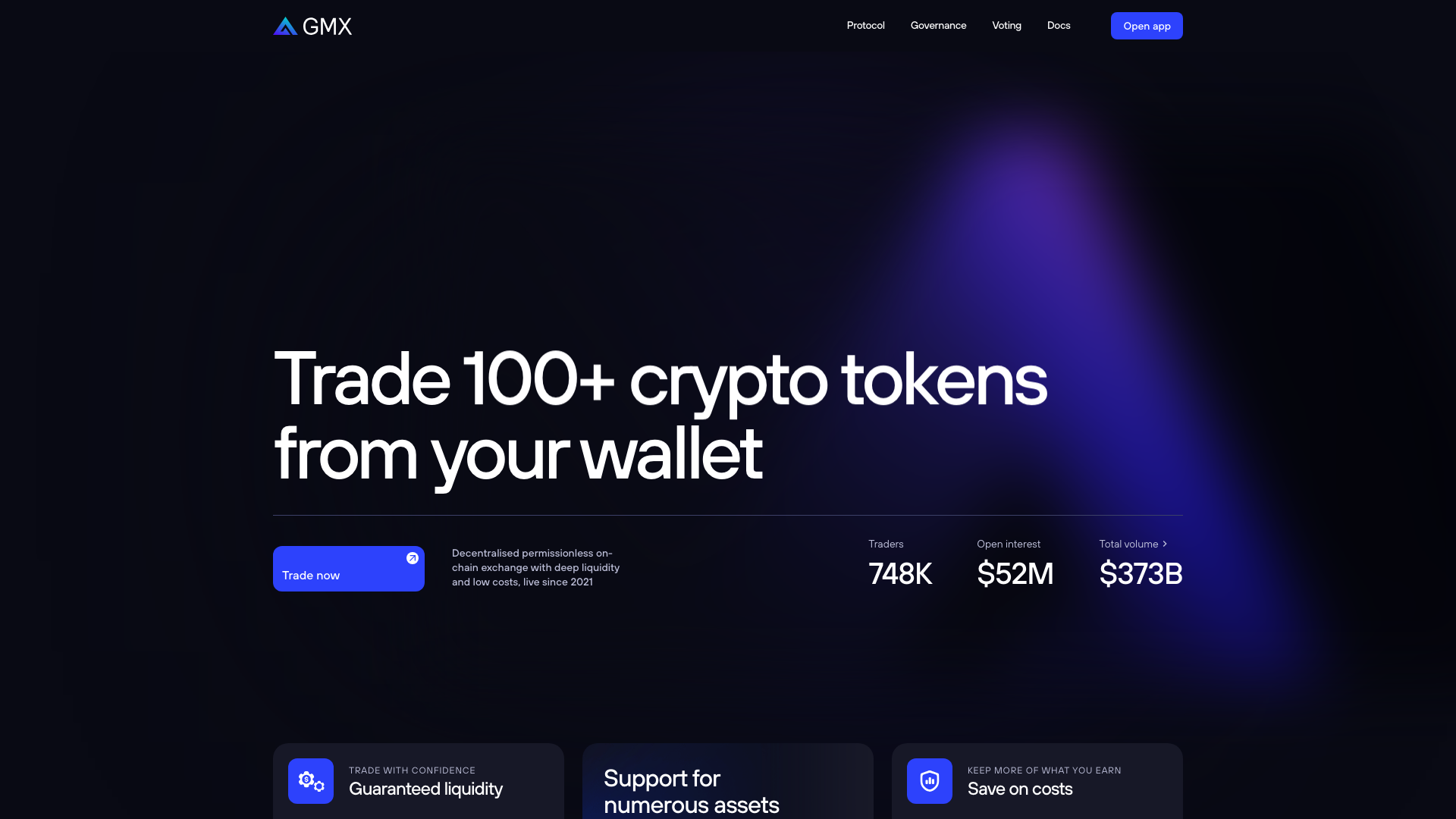
GMX is a decentralized spot and perpetual exchange running on Arbitrum, Avalanche, Botanix, and MegaETH, with leverage to 100x and oracle-based pricing from Chainlink Data Streams instead of an order book (GMX docs). You trade from your own wallet; there is no account.
On mobile it is the least app-like of the six — you are using a web interface through a wallet, and it shows. But the model is the purest: keys, collateral, and positions never leave your control, and oracle pricing sidesteps the thin-book wick problems smaller venues have. For an onchain-native trader who lives in a wallet anyway, GMX is the natural pick.
dYdX — Best For Market-Structure Traders
dYdX runs a chain-native central limit order book, and its documentation reads like a venue spec sheet: tick size, step size, margin fractions, leverage caps, open-interest limits (dYdX help center). That is the product. It exposes the mechanics most consumer apps hide.
On a phone, this makes dYdX the most demanding app in the list — and for a certain trader, the most trustworthy, because nothing is abstracted away. If you think in terms of order books and margin math, it fits. If you want one-tap flows, it will feel like homework.
The Verdict
- Self-custody plus a consumer-grade mobile flow: Farao. Nothing else in the list combines both.
- Maximum speed and depth on a CEX: Bybit for experienced traders, OKX if you want the same breadth with better risk visibility.
- First leveraged trade: Kraken Pro, then graduate.
- Fully onchain, browser-based: GMX for simplicity of model, dYdX for market structure.
If I had to compress it further: the centralized apps still win on raw market depth and ecosystem maturity, and the self-custodial apps now win on everything custody-related without the workflow penalty they used to carry. The gap that remains is a preference, not a handicap — which is a meaningful change from where this category was even two years ago.
Frequently Asked Questions
What is the difference between crypto derivatives and spot trading apps?
Spot apps exchange assets at the current price. Derivatives apps trade contracts — usually perpetual futures — that track an asset's price and support leverage, funding rates, and short positions, which adds margin and liquidation mechanics the app has to surface.
Are self-custodial derivatives apps as fast as exchange apps?
For order placement, the gap has mostly closed: venues like Hyperliquid and dYdX run order books on dedicated chains, and session-based signing removes the per-order wallet popup. Fully onchain venues like GMX still depend on chain execution.
How much leverage do these apps offer?
Farao and Kraken Pro advertise up to 50x; Bybit, OKX, and GMX go to 100x on some contracts; dYdX caps vary by market. Available leverage also changes with position size on most venues.
Which app is best for beginners?
Kraken Pro is the easiest centralized option to start with. Farao has the simplest flow overall, with the caveat that leveraged trading carries the same risk everywhere regardless of interface.
Do I need KYC for all of these apps?
The centralized apps (Bybit, OKX, Kraken Pro) require identity verification. The self-custodial venues (GMX, dYdX) and wallet-native apps like Farao are structured around onchain wallets instead of exchange accounts; requirements can still vary by region and funding method.